
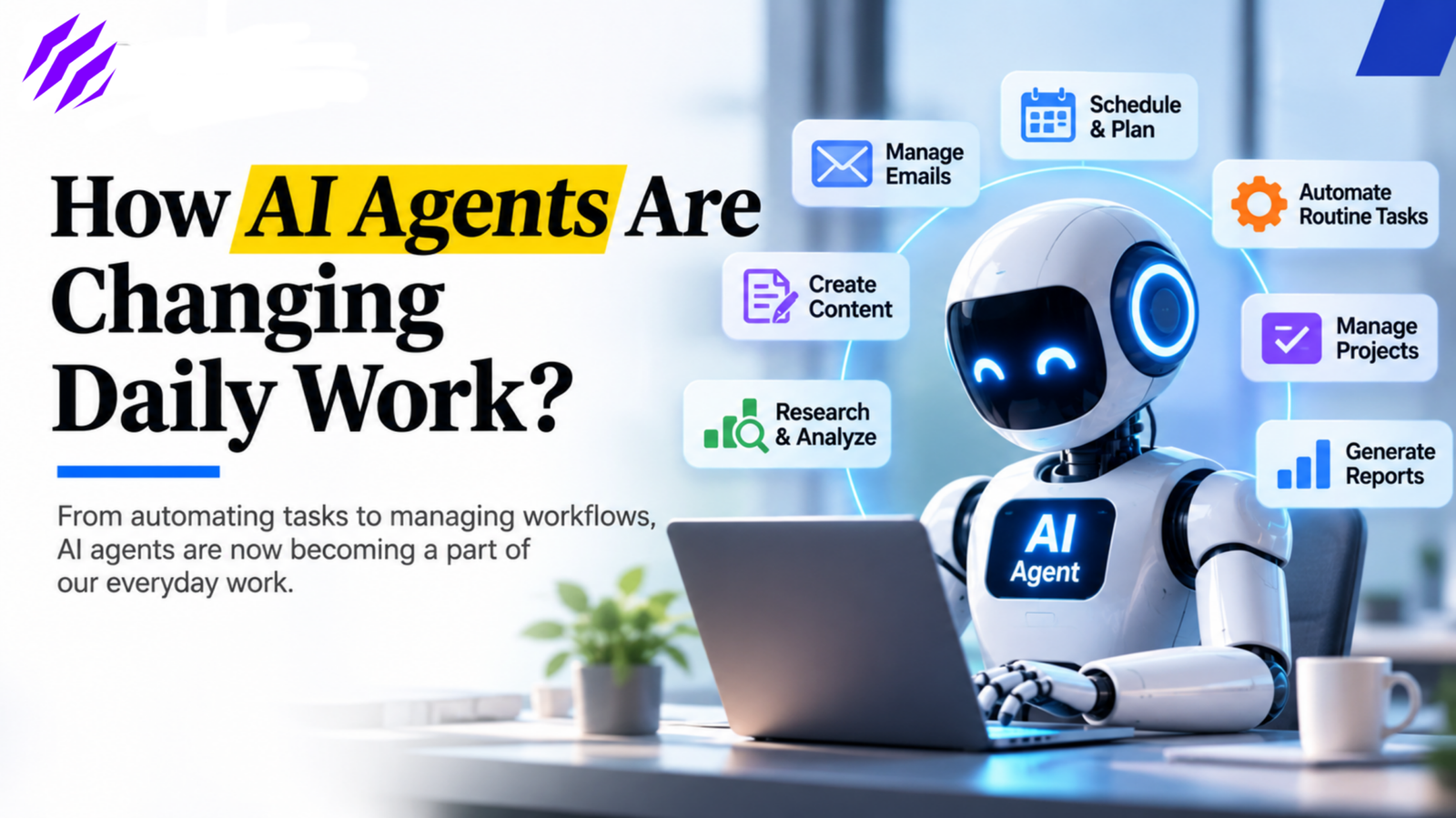
Most conversations about AI at work have centred on chatbots systems that answer one question and then go quiet. That’s now changing, AI Agents system can carry out entire tasks on their own: breaking a goal into steps, using outside tools of software, updating records, and finishing a workflow without someone promoting each stage. This article lays down the real difference between a chatbot and an agent, looks at how fast businesses are adopting these systems, and review the legal precedent forming around who’s responsible when an autonomous AI system causes harm centred on Moffatt v. Air Canada, 2024 BCCRT 149. It argues that even though agent AI is spreading quickly, the law built on older ideas of agency and misrepresentation hasn’t caught up,learning companies exposed to liability many haven’t dealt with yet.
Growth of AI
Growth has been fast: Use of AI agents rise quickly from 2025 into 2026. Customer service departments have led the way, with most now using some form of AI agents and software makers are increasingly baking agents directly into their products rather than offering them as an add on, a trend expected to keep growing through the year.
Full scale use is still rare: High adoption numbers hide a smaller reality only a share of organizations have rolled agents out across an entire department. Most are still testing or running limited trials.
Results are mixed: Workers are getting some efficiency benefits, but also facing more disruption. A lot of employees say they now check AI produced work more closely, not less. Rather than eliminating jobs, the data shows AI is mostly reshaping them: changing what tasks people handle day to day and giving rise to new roles focused on overseeing AI output.
A real world example
The foundational precedent for corporate liability arising from AI agent conduct is Moffatt v. Air Canada, 2024 BCCRT 149 (British Columbia Civil Resolution Tribunal).
Facts: A passenger consulted Air Canada’s website chatbot regarding bereavement fare policy. The chatbot advised that a bereavement discount could be claimed retroactively, a representation that directly contradicted the airline’s actual policy stated elsewhere on its own website. The passenger relied on this representation and was later denied the retroactive refund.
Air Canada’s defense: The airline advanced the argument that the chatbot functioned as a separate legal entity responsible for its own actions, and that the company could not be held liable for the tool’s independent output.
Holding: The Tribunal rejected this defense outright, characterizing it as a novel attempt to apply traditional legal doctrine to a generative AI dispute, and signaling that courts would allocate AI related risk to the deploying company rather than the technology itself. Applying the established four-part test for negligent misrepresentation under Canadian tort law, duty of care, an untrue or misleading representation, negligence in making it, and reasonable and detrimental reliance, the Tribunal found that Air Canada owed Moffatt a duty of care, that the chatbot’s representation was inaccurate, and that Moffatt had reasonably relied on it to his detriment.
Doctrinal significance: Legal commentary on the ruling frames it within the long-standing tort principle governing liability for automated tools generally namely, that an electronic agent or automated system deployed by a person remains, in law, a tool of that person, and the deploying entity cannot disclaim responsibility for the tool’s output merely because the output was machine-generated rather than human authored. Subsequent analysis has emphasized that this precedent imposes concrete operational duties: consistency between AI-generated and static company representations, and a bar on requiring consumers to independently verify AI-provided information before relying on it.
Relevance to agentic AI in the workplace: Moffatt concerned a conversational chatbot providing information, a comparatively narrow fact pattern. Agentic systems that autonomously execute transactions, modify records, or bind the company to obligations (scheduling, procurement, HR actions) raise a materially higher liability exposure, since the “representation” in an agentic context is often an action taken, not merely a statement made. Employment and agency law principles respondeat superior and apparent authority among them are increasingly cited by practitioners as the applicable analogical framework, though no jurisdiction has yet issued binding appellate authority squarely addressing autonomous multi-step agentic conduct as of this writing.
Conclusion
The shift from conversational to agentic AI represents a genuine change in kind, not merely degree, in how organizations deploy automated systems in daily operations. The adoption data confirms this shift is proceeding at considerable pace, even as scaled, mature deployment lags meaningfully behind headline adoption figures. Legally, Moffatt v. Air Canada establishes the operative baseline principle: an organization cannot disclaim liability for an AI system’s conduct by characterizing that system as an independent actor. As agentic systems increasingly take autonomous action rather than merely generating text, organizations should anticipate that courts will extend this same allocative logic, and prudent legal and compliance practice now counsels treating every deployed AI agents as a fully attributable extension of the organization itself, not a liability firewall.
FAQs
1. What’s the difference between a chatbot and an AI agent?
A chatbot answers one question and stops. An AI agents can take a goal, break it into steps, use other tools or software, and complete a task on its own like scheduling a meeting, updating a record, or finishing a workflow without someone prompting each step.
2. Are companies actually using AI agents yet, or is this still hype?
Both, to some extent. Adoption numbers are high, most companies say they’re using AI agents in some form. But far fewer have actually scaled them across a full department. Most are still testing or running limited pilots.
3. Is AI replacing jobs?
The evidence so far points more toward AI changing what people do shifting responsibilities and creating new oversight roles, rather than eliminating jobs outright. That said, the impact varies a lot by industry.
4. Who’s responsible if an AI agent makes a mistake?
Based on precedent so far (see the Air Canada case), the company that deploys the AI is held responsible, not the AI itself. Courts have rejected the idea that an AI tool can be treated as a separate, independently liable entity.
5. What happened in the Air Canada case?
Air Canada’s chatbot gave a customer incorrect information about a bereavement discount. When he relied on it and was later denied the refund, he sued. Air Canada argued the chatbot was responsible for its own mistake, the tribunal rejected that argument and held the airline liable.
6. Does this mean every business using AI could get sued?
Not automatically, but it does mean businesses can’t assume AI shields them from responsibility. If an AI agent gives wrong information or takes a wrong action, the company is still on the hook, the same as if an employee had made the error.






Leave a Reply